 Official Site
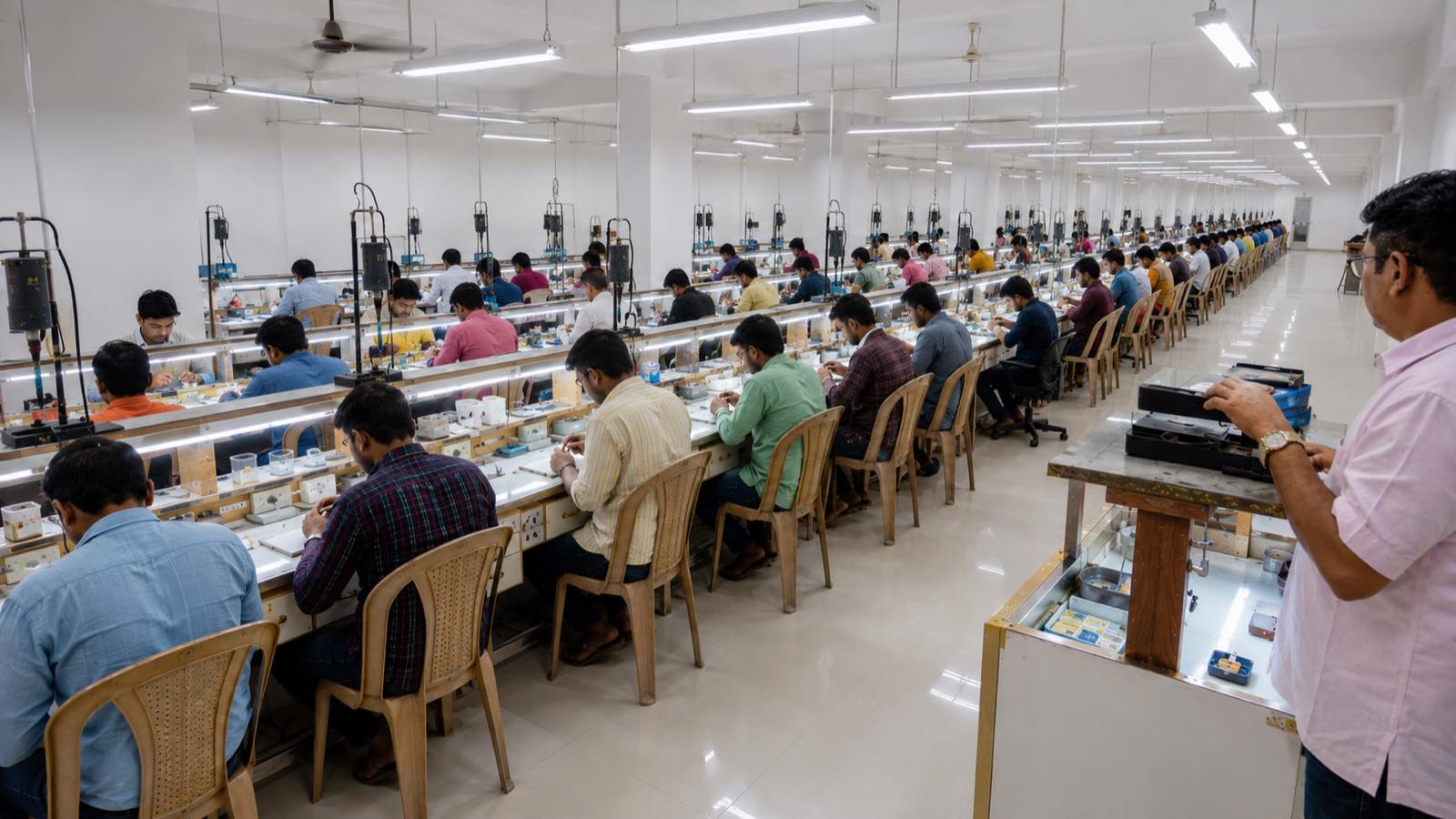
Buyers new to sourcing from India often ask for "a quote on jewellery", and the honest answer is another question: which of these are we talking about? At DVNJEWELRY we work across precious-metal jewellery, gold-filled products, sterling silver, gold vermeil, and custom-designed pieces. Those five sit next to each other in a catalogue and look like variations on one theme. They are not. Each one carries a different cost structure, a different failure mode, and a different set of things a buyer has to be told before the first order rather than after it.
They are five different products, not five finishes
Precious-metal jewellery is the most straightforward conversation, because the metal is the piece. What the buyer is really purchasing is the workmanship and the consistency, and the metal cost moves on its own.
Sterling silver behaves differently again — a metal with its own market, its own tarnish behaviour, and its own expectations about how a piece will look after a year in a customer's drawer rather than on the day it ships.
Gold-filled and gold vermeil are where the most avoidable disappointments happen, because both are frequently described to an end customer as "gold". They are distinct constructions with distinct wear characteristics, and a buyer who does not know which one they have ordered will find out from their own returns. A manufacturer who lets that happen has not saved anyone any time.
Custom-designed pieces are not a category at all in the same sense. They are a process, and that is the next section.
A custom piece is a chain, and every link has a decision in it
Raw material, CAD, casting, finishing, quality control, finished piece. Written out like that it reads as a conveyor belt. In practice each step is a place where the buyer's intention can quietly diverge from what is being made.
The CAD stage is where most of that divergence is cheap to fix and where most of it is missed. A drawing that both sides have looked at properly is worth more than any amount of goodwill later in the chain. Casting and finishing are where the cost of a late change stops being a conversation and starts being a scrapped piece.
Quality control at the end is not a stage that catches problems so much as one that confirms the earlier stages were right. A factory that relies on final QC to find its mistakes is a factory with an expensive habit.
Exporting is a separate discipline from making
A piece that is correct in Mumbai and late in a customs queue is, from the buyer's side, simply late. Export work is documentation, logistics, and expectation management, and the third is the one that gets neglected because it does not appear on any form.
Expectation management means saying the delivery date you believe rather than the one that wins the order. It is slower to sell that way, and it is the only version that survives contact with a second order.
Why the repeat order is the actual business
Manufacturing at scale is a network business. Nobody owns the whole chain — not the metal, not the logistics, not the shelf the piece finally sits on — so the long-term relationships are the asset, not the individual transaction. A buyer who comes back after a difficult quarter is worth more than a larger first order from someone who will not.
That is also why the categories matter so much at the start. Every one of the five above can be made well. What decides whether a buyer returns is whether they were told, plainly and early, which one they were buying.
Leave your comment